Most small churches do the hardest part of visitor follow-up well. A new family walks into the lobby on a Sunday morning, a greeter says hello, somebody hands them a connect card, and by the time the closing song starts the family has a bulletin and a friendly face to remember. The first thirty minutes go fine. The next seven days are where the system quietly breaks down. The card sits in a basket on the welcome desk until Tuesday afternoon. The associate pastor means to call on Wednesday. The deacon chair is going to send a handwritten note on Thursday. By Sunday the family is either back, or they are not, and nobody on the team can quite reconstruct what happened in the gap.
The good news is that visitor follow-up does not require a sophisticated funnel or a marketing automation tool. It requires a short list of habits that the team can actually sustain through a normal week, plus a quiet way to track who has been contacted so the same family does not get four calls or zero. This post walks through what a workable visitor follow-up rhythm looks like in a small church, what to drop, and how to keep the system honest after the first month of enthusiasm fades.
What Visitors Actually Notice in the First Week
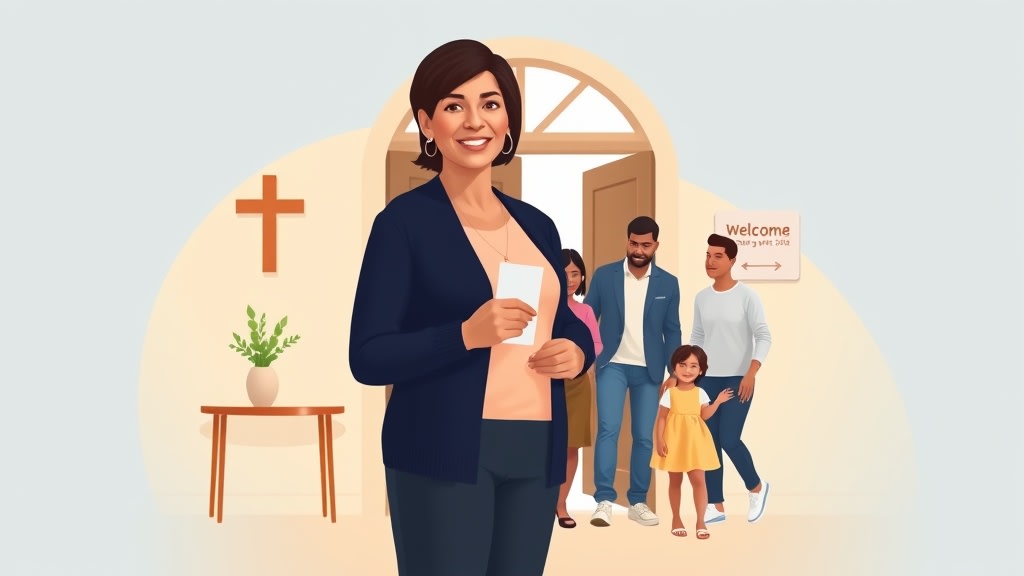
Before talking about cadence, it helps to remember what visitors are actually paying attention to. Most first time guests are not waiting for a polished welcome packet in the mail. They are watching for two small signals. The first is whether anyone from the church reached out by name within the first few days, which tells them they were seen as a person rather than processed as a number. The second is whether that outreach felt natural rather than scripted, because most visitors have been on the receiving end of a templated email or two and they recognize the pattern instantly.
Those two signals are surprisingly easy to send and surprisingly easy to miss. A short text on Monday afternoon from a real person, using the visitor's first name and mentioning something specific from the conversation in the lobby, lands very differently from a Tuesday email blast that opens with Dear Friend. The bar a small church needs to clear is not professional polish. It is sincerity and timing, and both of those are within reach of any team that decides to take the first week seriously.
The First 72 Hours: Who Reaches Out and How
The strongest visitor follow-up rhythms in small churches share one feature. The first contact happens within seventy two hours, and it comes from a real person rather than from the church as an institution. A short personal text or a brief phone call from the pastor, an associate, or a deacon who actually met the family in the lobby is more useful in the first week than a beautifully designed welcome email that goes out on day five. The visitor remembers the face. The face calling them on Monday confirms that the church is the kind of place that pays attention.
The content of that first contact should be short. Thank them for coming on Sunday. Mention one specific thing from the conversation. Ask one open ended question about whether they are settling into the area or what brought them to a service that morning. Leave a door open for a future conversation without pressuring them to commit to anything. Do not invite them to four ministries in the first paragraph. The first contact is a hello, not a sales call, and treating it that way is the difference between a visitor who comes back and a visitor who feels recruited.
Who makes that contact matters more than which channel they use. A text from the deacon who shook their hand at the door beats an email from a generic church account every time. If the team is small enough that one or two people are doing the greeting and the calling, that is fine and probably a strength. The visitor experiences continuity. The same person who welcomed them on Sunday is the one checking in on Monday, and that consistency is what a large church often struggles to manufacture.

The Second and Third Touches
If the first contact lands well, the second touch usually happens around day seven to ten and serves a slightly different purpose. The first contact says we saw you. The second contact says we remember you, and it is the touch that quietly invites the visitor to come back without making the invitation awkward. A short text on Saturday afternoon saying we hope to see you tomorrow, no pressure either way, is enough. Many small churches skip this touch because it feels too obvious, but visitors almost universally read it as warm rather than pushy when it is sent by a real person.
The third touch belongs somewhere in the second or third week, and its job is to start the move from visitor to relationship. This is the right moment to invite the family to one specific next step. Not five next steps. A small group, a midweek service, a coffee with the pastor, a meal at someone's home. The principle is the same one that runs through a workable church member follow-up system. A clear, low pressure invitation to one thing produces more genuine engagement than a buffet of options.
If the visitor responds to any of these three touches, the follow-up rhythm shifts from outreach to relationship and the system can quietly relax. If the visitor does not respond, the next decision is harder and worth treating with care. A fourth contact in week four, brief and unobtrusive, is appropriate for most situations. A fifth contact is usually the point at which the team should respect the silence and stop reaching out. Visitors who are interested but slow to respond will come back on their own timing. Visitors who have decided not to return will appreciate the team noticing without being told.
What to Stop Doing
Several common visitor follow-up practices feel productive but quietly hurt the relationship. The automated welcome email that arrives within minutes of the connect card being scanned tells the visitor they have been added to a list, not greeted by a church. The mailed welcome packet with a refrigerator magnet and a stack of brochures sends a similar signal. Neither is fatal, but neither moves the relationship forward in the way a single personal text would. If the team is choosing between sending a polished packet and sending a real person to make a real call, the call wins every time.
The other common mistake is the multi person outreach blitz. The pastor calls Monday. The deacon emails Tuesday. The small group leader texts Wednesday. The women's ministry coordinator sends a Facebook message Thursday. Each person means well. The visitor experiences it as overwhelming and slightly performative. One designated contact in the first week, coordinated through the care team, produces a warmer outcome than four uncoordinated touches from four different people. The dashboard that prevents this kind of collision is the same one that keeps the rest of the care ministry honest, and a short look at what a church care team dashboard should actually show walks through the same idea from the care team angle.
How to Track Follow-Up Without Turning It Into a CRM Project
The tracking question is where most small church follow-up systems quietly fail. The connect cards sit in a basket. The greeter takes them home. The pastor's assistant types them into a spreadsheet on Tuesday morning. By the time the spreadsheet is up to date, the seventy two hour window has already closed for half the visitors from the previous Sunday. The system collapses not because anyone is lazy but because the gap between the card and the dashboard is too long to support the cadence the team is trying to keep.
The simplest workable pattern is to enter visitors into whatever tracking tool the team uses on Sunday afternoon or Monday morning at the latest, and to assign each visitor to a specific person before the day ends. Assignment is the small but decisive step. A visitor who is on a list with no name beside them is a visitor who will not get called. A visitor with a single name next to them, and a clear understanding that the assigned person owns the first contact, almost always gets called. The assignment is the system. Everything else is logistics.
When to Hand Off to the Care Team
Visitor follow-up and ongoing care are different jobs and they need different rhythms. The first few weeks are about welcoming. Once a visitor decides to keep showing up and starts to identify with the church, the touch shifts from outreach to assigned care, and the family becomes part of the care team's regular coverage. This handoff often gets dropped because it does not feel like a milestone, but the visitor notices when it does not happen. A family that was contacted four times in their first month and then heard nothing in their next four months has effectively been welcomed and then forgotten.
A clean handoff is mostly a matter of moving the family from the visitor list into the assigned family roster. Whoever was doing the visitor follow-up names them to a deacon or a care team member, the new contact sends a short hello in the next week, and the rhythm of ongoing care begins. The deeper shape of that rhythm is the same one described in how to build a church care team that covers every family. The point is simply that nobody falls off the edge of the visitor list with no one waiting to catch them on the other side.
What a Sustainable Weekly Rhythm Looks Like
The healthiest small church visitor follow-up systems run on a short, repeatable weekly rhythm. Sunday afternoon or Monday morning, connect cards get entered and assigned. Monday and Tuesday, first contacts go out. Wednesday evening or Thursday morning, the team takes five minutes to check who has not been reached yet and either reassigns or makes the call. Saturday, second touches go out for the visitors from the previous Sunday. The whole rhythm is maybe ninety minutes a week across the team, and it produces a follow-up experience that feels personal rather than automated.
The rhythm survives because it is small and because every step has a single owner. When the team tries to upgrade the system into something more sophisticated, with multi step email funnels and segmented lists and conditional automations, the rhythm collapses under its own weight by month three. The simpler version, run honestly, outperforms the elaborate version run sporadically. This is the same pattern that shows up across small church ministry generally. The system that the team can actually keep is the system that actually works.
The Honest Bottom Line
Church visitor follow-up is not primarily a tooling problem. It is a habits problem with a small amount of tracking attached. A short personal contact in the first seventy two hours, a quiet second touch around day seven, and a single low pressure invitation in week two or three will outperform almost any automated funnel a small church could build. The tracking exists to make sure nobody gets called four times and nobody gets called zero times, and to give the team a clean handoff into ongoing care when the visitor decides to stay.
The clearest test of a visitor follow-up system is the question the team can answer on a Wednesday night. Who came on Sunday, who has been contacted, and who is still waiting. If those three answers are visible in under a minute, the system is doing the job and the team can spend their energy on the conversations rather than on the spreadsheet. If those answers take fifteen minutes to assemble, the rhythm has already started to slip, and the visitors who came in last week are quietly slipping with it. The families who keep coming back will be the ones who felt seen in the first week, and that early attention is finally the only investment that pays off later.
Related Reading
For more on building the care rhythms that sit underneath good visitor follow-up, these posts pair well: Church Member Follow-Up System: What a Small Church Can Actually Sustain, How to Build a Church Care Team That Covers Every Family, and How to Close the Back Door of Your Church.