Walk into most evangelical churches today and ask what the deacons do, and you will get a different answer in every congregation. In one church they handle the building and the budget. In another they take the offering and serve communion. In a third they are essentially a board of trustees with a more biblical-sounding title. Somewhere along the way, the original pastoral care work that gave deacons their name slipped quietly out of the job description in many congregations.
That drift is worth taking seriously. Not as a complaint about how churches got here, but as an invitation to recover something the early church understood plainly. Deacons were created to solve a pastoral care problem. The text that introduces them is not about budgets or buildings. It is about widows who were being overlooked and a pastoral team that could not stretch any further without something tearing. Understanding what scripture actually says about deacons changes how a church thinks about its care ministry today, often in ways that surprise long-serving deacons themselves.
This is not an argument that deacons should never touch a budget or serve communion. It is an argument that those things are downstream of a more fundamental calling, and that recovering the original calling tends to renew everything else.
Where Deacons First Appear in Scripture
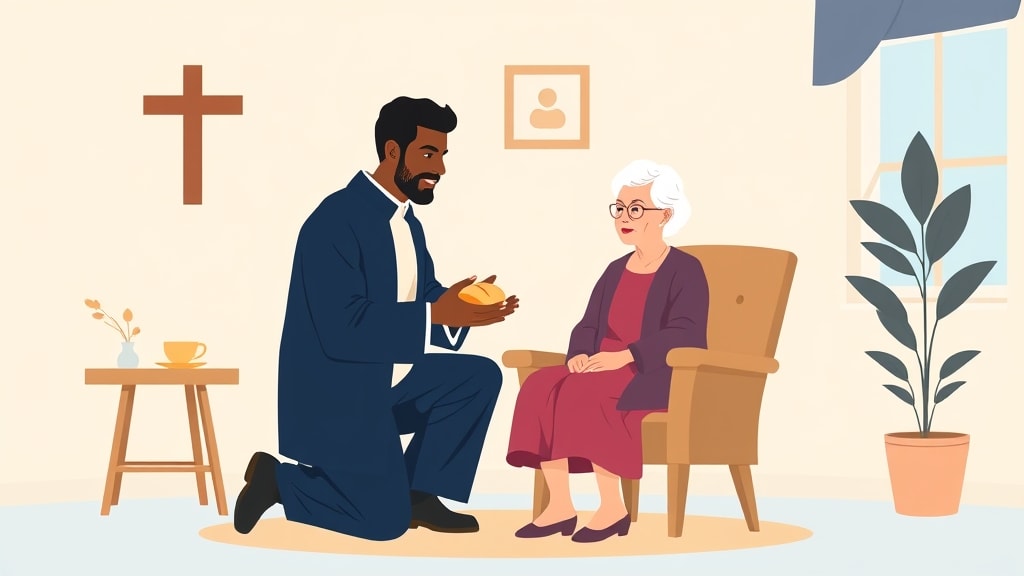
The clearest account of how the deacon role emerged is in Acts 6. The Jerusalem church is growing fast, and a problem surfaces that the apostles cannot solve themselves. The Hellenistic widows are being overlooked in the daily distribution of food. It is a pastoral care failure with practical and relational dimensions, and the apostles recognize that if they take it on personally, they will neglect the ministry of the word and prayer that only they can do.
The solution is striking in how organizational it sounds. The apostles ask the church to identify seven men of good reputation, full of the Spirit and of wisdom, to be appointed to this specific responsibility. The word that gets used for what these seven will do is the noun form of the verb that means to serve at a table, to wait on, to attend to the needs of another. The same root that later becomes the title deacon.
What gets lost in many modern readings of this passage is how seriously the apostles took the pastoral nature of the work being delegated. They did not pick administrators. They picked men of obvious spiritual maturity and gave them a care responsibility, because the work itself was care. Stephen and Philip, two of the seven, go on to become some of the most spiritually significant figures in the early chapters of Acts. The idea that deacons are the practical guys who handle the unspiritual logistics so the pastors can do the real ministry is almost the opposite of what the text portrays.
What Diakonos Actually Means
The Greek word diakonos appears around thirty times in the New Testament, and its range tells you something important. It is used for table servants, household workers, government officials, and gospel ministers. Paul calls himself a diakonos. He calls Christ a diakonos. He calls Phoebe a diakonos of the church at Cenchreae in Romans 16. The word is doing flexible work, but the center of gravity is consistent. It describes someone who attends to the needs of another, often through humble and practical means, and often on behalf of a leader or a community.
That semantic range matters because it cuts against two common misreadings. The first misreading reduces deacon work to logistics, as if the diakonos is essentially a glorified usher. The second misreading inflates deacon work into a parallel pastoral office, as if a deacon is just a deputy pastor. Neither is quite right. The deacon is something more specific. A person commissioned by the church to attend to the practical and relational needs of its members on behalf of the pastoral leadership, in a way that frees the pastors to focus on the ministry of the word and frees the members to receive care that genuinely reaches them.
In practical terms, that puts deacons in a particular slot in the church's care economy. They are not the senior shepherds. They are also not the volunteer helpers. They are an ordained or commissioned tier of mature believers whose specific calling is to make sure the practical pastoral needs of the congregation are seen and met.

The Qualifications in 1 Timothy 3 and What They Tell Us
The other major passage on deacons is in 1 Timothy 3, where Paul lists the qualifications for the office alongside those for overseers. The qualifications are revealing. Deacons must be dignified, not double-tongued, not addicted to much wine, not greedy for dishonest gain. They must hold the mystery of the faith with a clear conscience. They must first be tested. They must manage their children and their own households well.
What is conspicuously absent is any mention of administrative skill, organizational gifts, or aptitude for finance. The list is almost entirely about character, integrity, and the trustworthiness required to be welcomed into the homes and lives of church members in moments of need. That should reframe how a church thinks about who it puts forward for deacon. The default question in many churches is whether a candidate can run a meeting or manage a budget. The biblical question is whether his or her character can be trusted with the quiet, vulnerable work of pastoral care.
The qualification list also implicitly defines the work. The character requirements only make sense if deacons are going to be entrusted with situations that demand discretion, integrity, and personal credibility. A double-tongued person cannot be a deacon because deacons hear things in homes that must be held faithfully. A greedy person cannot be a deacon because deacons handle resources meant for people in need. The qualifications presuppose a pastoral care job description even though the passage never explicitly lays one out.
Why Deacons Are Care Workers Before They Are Administrators
Once you read Acts 6 and 1 Timothy 3 together, a clear picture emerges. The deacon is a commissioned servant of the local church whose primary work is the practical pastoral care of its members. The administrative and logistical responsibilities that have accumulated around the office in modern church life are not wrong, but they are downstream. When they move upstream and take over, the office quietly loses its biblical shape.
Most churches did not decide to do this on purpose. It happened through a long accumulation of small drifts. Someone needed to count the offering, and the deacons were trusted. Someone needed to oversee the building, and the deacons were available. Someone needed to make decisions about budgets, and the deacons were the most stable body in the church. One by one, the practical tasks that needed grown-up Christian hands got handed to the deacons until the original work of widow-care, family-visiting, and quiet pastoral attention had to compete for time with everything else. In most churches, it lost.
The recovery starts with naming this honestly. A deacon body that has lost its pastoral care center is not failing because the deacons are lazy or unspiritual. It is failing because the job has been redefined without anyone noticing, and the people sitting in those seats are doing exactly what the church has told them to do.
Where Pastoral Care Begins and Where Deacon Care Picks Up
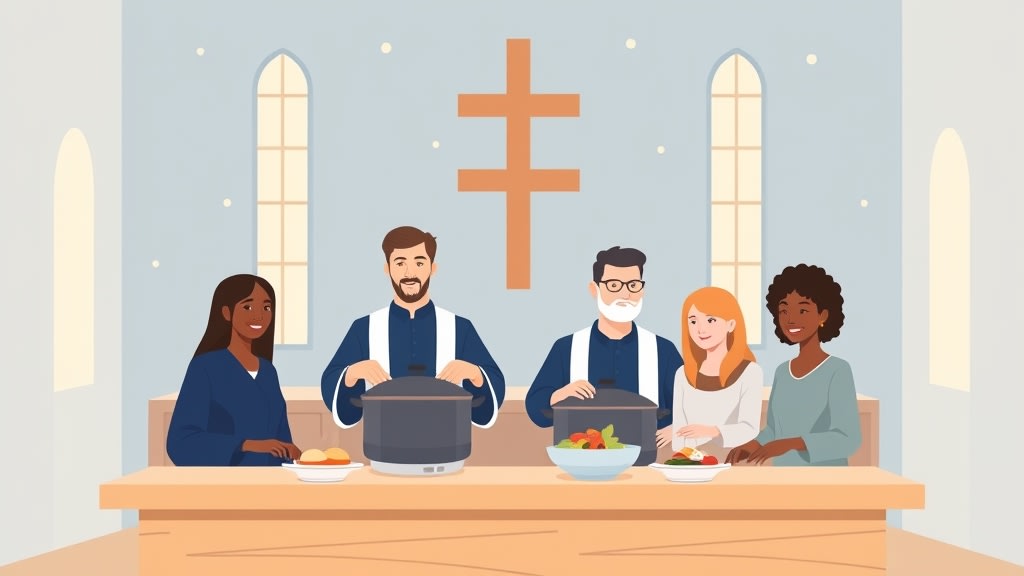
One of the most useful clarifications a church can make is the line between pastoral care that requires the pastor and care that does not. Many pastors carry far more direct care load than scripture asks them to, partly because there is no clear handoff to anyone else and partly because the deacons have not been given the relational permission to step in. The result is a pastor who is stretched too thin to study and pray, and a deacon body that is doing important practical work without ever being meaningfully integrated into the care of souls.
The early church model in Acts 6 sketches the boundary. The apostles keep the ministry of the word and prayer. The deacons take responsibility for the daily care that previously was distracting from that ministry. Today, the practical version of this is a pastor who handles the genuinely pastoral moments that require his role, such as preaching, teaching, counsel for the most serious situations, formal shepherding decisions, and crisis ministry that needs his authority. The deacons handle the rest of the care landscape, which is most of it, including regular family contact, meal coordination, visits in homes and hospitals, follow-up after life events, and the steady relational maintenance that keeps families from drifting.
When this division is clear, both the pastor and the deacons flourish in their callings. When it is muddy, the pastor ends up doing care work that drains him from his primary calling, and the deacons end up doing administrative work that disconnects them from theirs.
The Deacon as the Eyes and Ears of the Pastor
There is a posture toward deacon ministry that the New Testament implies without ever stating directly. The deacon is the pastor's eyes and ears in the lives of the congregation. He sees the families up close in ways the pastor cannot. She notices the patterns that a Sunday morning conversation would never reveal. They carry information back to the pastoral leadership when something needs more attention, and they receive direction when the pastor sees something they should address.
This is what makes a clear family assignment structure so important. Without it, the deacon body is reactive. With it, every household in the church has a named deacon whose specific responsibility is to know how that family is doing, to make regular contact, and to surface what the pastor needs to know. The deacon is not a substitute for the pastor's shepherding. He is the means by which the pastor can shepherd many more families than he could ever reach personally.
Done well, this turns the deacon body into the single most powerful pastoral care instrument the church has. The pastor stays in his lane of word and prayer, the deacons cover the relational ground he cannot, and information flows in both directions so that nothing important falls through the cracks. Done poorly, the deacons drift back toward administration and the pastor ends up either neglecting families or burning out trying to reach them all himself.

Modern Deacon Ministry as a Continuation of Acts 6
The Acts 6 story is sometimes treated as a one-time fix for a specific problem in the Jerusalem church. The text reads more like a pattern the early church recognized and institutionalized. The problem of growing congregations stretching their pastoral leadership beyond what any human can carry has never gone away. The solution Acts 6 sketches is the same solution churches still need today. Identify mature, spiritually serious people. Commission them to a specific care responsibility. Free the pastoral leadership to focus on the work only they can do.
A modern deacon ministry that is operating biblically looks remarkably similar to what Acts 6 describes. There is a defined group of people the deacons are responsible for. There is a clear sense of what care looks like, week to week and month to month. There is a working relationship with the pastoral leadership that includes both reporting and direction. And there is enough structure to make sure the families being cared for are not chosen by who is loudest or most visible but by a faithful coverage of the whole congregation.
The tools used to maintain that structure can look very different across churches. A small church may run the whole thing on a printed list and a deacons meeting once a month. A growing church may need purpose-built software that holds the family assignments, the contact rhythms, and the gaps in one trustworthy place. The form is flexible. The underlying calling is not.
Practical Implications for Your Deacon Ministry Today
If your deacons currently spend the majority of their time on administrative tasks, the most useful thing you can do is name that honestly and decide whether you want to recover something closer to the biblical pattern. Recovering it does not mean abandoning the administrative responsibilities overnight. It means slowly rebalancing the deacon body so the pastoral care work is what the office is actually known for, and the administrative work either fits around it or moves to a different group of people altogether.
Practically, that recovery usually starts with three moves. Build a clean, current list of every household the deacons are collectively responsible for. Assign each family to a specific deacon by name, so no household is the abstract responsibility of the body in general. Establish a steady rhythm of contact that the deacons can sustain without heroics, and review the gaps regularly so quiet families do not slip into uncontacted ones. None of this is new. It is what Acts 6 was already pointing at.
The deacons who experience this shift often describe it as recovering a calling they did not know they had lost. Meetings feel different. The work feels weightier in the right way. The families being cared for notice, sometimes without being able to articulate what changed. The church begins to feel like a body where every member is genuinely seen, because every member actually has someone whose job it is to see them.
Related Reading
For more on putting biblical deacon ministry into practice in a modern congregation, these posts go deeper into the operational side of the calling: Deacon Family Ministry Plan: A Practical Guide for Churches, How to Train Deacons for Pastoral Care That Actually Reaches Families, and How Often Should Deacons Contact Their Assigned Families.