Most deacon visit logs start their life on a clipboard or in a notebook, and most of them end their life forgotten in the bottom of a desk drawer six months later. The reason is rarely that the deacons stopped caring. It is that the log was designed by someone who was not the one filling it out, or it was designed for accounting rather than for ministry, or it tried to capture so much that no one had time to capture anything.
A good deacon visit log is closer to a private journal than a corporate form. It holds the small details a deacon needs to remember between visits, the larger patterns a deacon chair needs to see across families, and just enough structure that any deacon can use it without writing an essay every week. It is one of the simplest tools in a care ministry and one of the most quietly powerful when it actually gets used.
This post walks through what a deacon visit log really is, why most logs fall out of use, what the minimum fields should be, and a simple template you can adapt for your church before next Sunday.

What a Deacon Visit Log Actually Is
A deacon visit log is a running record of the meaningful contacts a deacon has with the families assigned to him. It is not a calendar. It is not a database. It is not a report for the elder board. It is a working notebook, kept by the deacon, used week to week to keep the families in front of him and to keep him honest about how he is actually shepherding them.
Most churches that have a log call it something else. The visit notebook. The deacon journal. The contact record. The names vary. The underlying instinct is the same. A deacon is responsible for a handful of families, and without some kind of record he ends up shepherding them from memory. Memory is more forgiving of gaps than the families it forgets.
The log also serves the wider care ministry. A deacon chair who can see, in summary form, what each deacon is logging can spot the families nobody has touched in a quarter, the deacons who may be carrying too much, and the patterns that quietly tell you whether the ministry is reaching the people it is meant to reach. None of that is possible if the work lives entirely in fifteen separate heads.
Why Most Deacon Visit Logs Don't Get Used
If you walk into a church that used to have a visit log and ask what happened, the answers are predictable. The form had too many fields. The deacons forgot to fill it out for a few weeks and felt sheepish about catching up. The chair stopped reviewing it, so the deacons stopped maintaining it. Someone proposed a digital version that never quite got built. The whole thing went quiet.
Under all of those specific failures sits a more basic problem. The log was designed as a piece of paperwork rather than as a tool. A paperwork mindset asks what information the church wants to capture. A tool mindset asks what the deacon needs in order to do his work well. Those are very different starting points, and they produce very different logs.
The deacons doing the visits are the ones who decide whether the log survives. The ministry only continues if filling it in feels useful to the person filling it in. If the log helps the deacon remember which family is in a rough patch, what they last talked about, who he promised to call this week, then he will use it because it makes the next visit easier. If it feels like a form he is submitting to someone else, he will fill it out for a while and then stop.
The Minimum Fields a Visit Log Should Have
The temptation is always to add fields. Once you decide to log anything, every interesting attribute starts to feel worth capturing. Resist this. A log with too many fields gets filled out poorly or not at all. A log with the right small set of fields gets filled out consistently and is genuinely useful.
For most deacons, the working minimum is six fields per entry. The household. The date. The form of contact, such as a visit, phone call, text, or coffee. A short note about how the family is doing. Anything specific that came up that needs follow-up. The next planned contact, even if approximate.
That is enough to support the work. The household and date give you a timeline. The form of contact tells you something about the depth of the touch. The note holds the substance. The follow-up captures the promises a deacon made that he otherwise might forget. The next planned contact gives the deacon a soft target to aim at and the chair a way to see whether the rhythm is holding.
Anything beyond those six fields should pass a strict test. Is this information that the deacon will actually use on his next visit, or that the chair will actually use when reviewing the log? If not, leave it off. The most disciplined logs are not the most detailed ones. They are the ones with no field that is regularly left blank.
A Simple Template You Can Start With Tomorrow
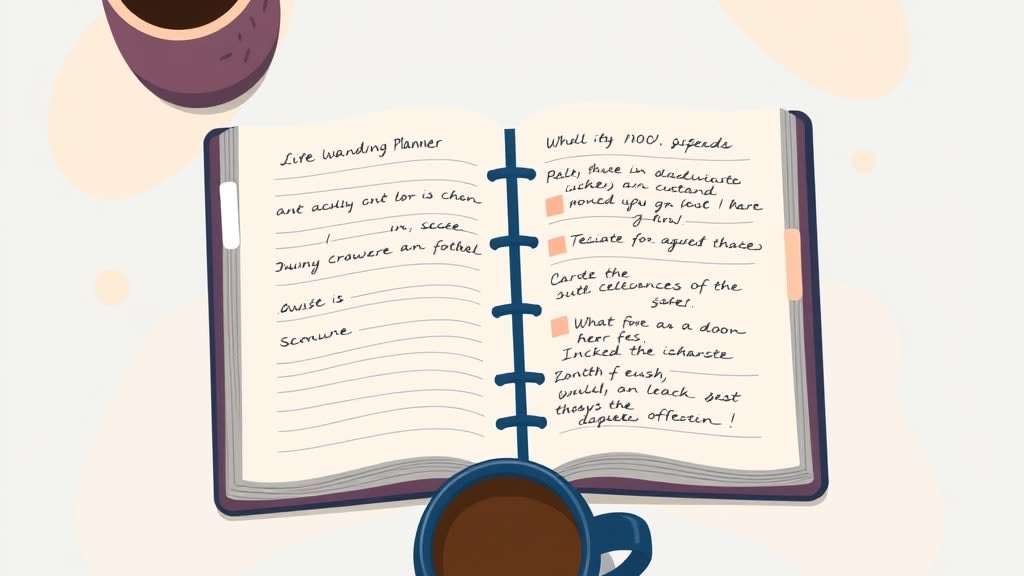
The simplest paper version of a deacon visit log fits on a single page per household. At the top of the page, the household name and any standing notes about the family, such as members, ages of children, ongoing concerns, and the deacon's running impression of the season the family is in. Below that, a running list of entries, oldest to newest, each line containing date, form of contact, a sentence or two about the contact, and any open follow-up.
A digital version can be a single spreadsheet tab per household or a single tab for the whole portfolio with a column for the household. The spreadsheet form is easier to share with the deacon chair and harder to keep substantive, since the row format quietly discourages writing more than a phrase. The paper form is harder to share and easier to write meaningfully in. Most churches end up with some kind of hybrid, where the richer notes live in a notebook and a thin summary lives in the shared spreadsheet.
Pairing the log with a clean family assignment list matters more than the format. The log only works if every household it covers has a named deacon, and the assignment list only works if every household it carries shows up in a real log somewhere. The two documents are halves of the same instrument.
How Detailed Should the Notes Actually Be?
The question of detail is where most logs get into trouble. Too little and the notes are useless to anyone, including the deacon writing them. Too much and the deacon stops writing them. The right level is somewhere in the middle and depends on the situation.
For routine touches, two or three sentences is plenty. The Hendersons came to Sunday lunch. Mike mentioned the new job is going well. Sarah is helping in the nursery again starting next month. Will follow up after Easter to ask how Mike's mother is doing. That note takes thirty seconds to write and gives the deacon everything he needs to remember when he sees the family next.
For harder visits, the notes should go longer. A family walking through illness, job loss, or a marriage in trouble deserves more than a sentence. The notes do not need to be a transcript. They need to capture enough that the deacon, reading them a month later, can pick up the conversation where it left off without making the family repeat themselves. The line between care and clinical record-keeping matters here. The log is a tool to remember the person, not a chart on a patient.
One practical guide is to write the notes in the second person, as if writing a short letter to your future self. You visited the Hendersons. Mike was tired. Sarah said the kids are settling. They asked you to pray for Mike's mom. The second-person voice keeps the writing warm and resists the drift toward clinical language.

Sharing the Log Without Breaking Trust
A visit log holds genuinely sensitive information. Families share things with deacons that they would not want passed around. The minute a log is shared too widely, deacons begin filtering what they write, and the log loses the substance that made it worth keeping.
The default should be that each deacon's log is private to that deacon, with summary access shared with the deacon chair and the pastor. The chair does not need to read every note. He needs to see when the last contact happened, whether any follow-up is open, and whether anything significant has come up that the pastor should know about. A short tag or flag on an entry is usually enough to surface the latter without exposing details.
When a family is going through something that genuinely needs broader pastoral involvement, the right move is rarely to widen access to the log. It is to have a conversation between the deacon, the chair, and the pastor about how to care for the family, and to keep the specifics on a need-to-know basis. The log records the work. It does not replace the relational decisions about how to handle hard situations. Training deacons in how to hold confidence is part of what makes a shared log culture safe in the first place.
When a Spreadsheet Stops Being Enough
For a small church with five or six deacons and seventy families, a paper notebook or a simple shared spreadsheet can run the entire visit logging system for years. The math is small enough that gaps surface quickly and updates are easy to enforce.
Past a certain size, the math turns. Once you have ten or twelve deacons each carrying fifteen to twenty households, the spreadsheet starts to strain. Deacons forget to update their tab. The chair cannot tell at a glance which families have gone uncontacted. The log that was supposed to surface gaps starts to hide them, because no one has the time to read fifteen tabs every month. Spreadsheets quietly go stale long before anyone calls them out loud.
That is the moment to consider a purpose-built care tool. Software designed for deacon care turns the log from a manual document into a living record. Every entry rolls up to a portfolio view. Gaps in contact surface automatically. The chair can see which families have not been touched in sixty days without reading every entry. The log stops being a document the deacons maintain and starts being a working surface that supports the ministry.
The right time to make this switch is not when the spreadsheet collapses. It is when keeping it current costs more than the value it produces. Most churches notice the strain for a year or two before doing anything about it. The cost is paid in families that quietly drift, and that cost is usually invisible until someone leaves the church and no one is sure when anyone last spoke to them.
Keeping the Log in Service of the Visit
The danger with any log, paper or digital, is that it slowly becomes the point. The deacon starts measuring his ministry by whether his log is current rather than by whether the families he serves feel known. The chair starts focusing on whether all the entries are complete rather than on whether the people are being cared for. The form crowds out the substance.
Resist that drift by reading your own log honestly every few months. Do the entries describe a ministry you are proud of, or do they describe a ministry that exists mostly on paper? Are the families you have not seen in a quarter showing up in the gaps, or are they hidden behind generic notes that pretend more contact happened than really did? The log is a mirror. It will tell you the truth about your ministry if you let it.
The best test of a deacon visit log is whether the families being cared for would describe their deacon as someone who shows up, remembers what they said last time, and follows through on what he promised. If they would, the log is doing its work, no matter how plain it looks. If they would not, no fancier system will fix the problem. The log is in service of the visit, not the other way around.
Related Reading
For more on building a sustainable deacon care ministry around a simple, honest record of contact, these posts go deeper into the operational side: How to Create Deacon Family Lists Without a Spreadsheet Mess, How Often Should Deacons Contact Their Assigned Families, and The Best Deacon Ministry Spreadsheet Template and When to Replace It.